


Meta's facial-recognition glasses are exactly the biometric nightmare the EU AI Act was written to stop. Here is what it means for you.
elcome to issue five. This week the story that stopped us in our tracks came not from a regulator's desk but from a pair of sunglasses. Meta has quietly shipped facial recognition to millions of Ray-Ban smart glasses, and EFF's threat lab confirmed the code is live. Pair that with a fresh EFF report on age-gates going global, and you have a week that shows, with uncomfortable clarity, exactly why the AI Act's biometric rules exist in the first place.
Let’s go.
yours, Flux

Flux Weekly is a 6-minute briefing for people who have to actually make AI work in Europe. Sole traders to enterprise, one issue every Friday morning.
- New We added ToTra and the Article 50 disclosure banner to the Flux compliance toolkit directory, both open-source and ready to fork.
- Updated The biometric systems section of the Flux high-risk classifier has been updated to include smart-glasses and wearable camera form factors following the Meta Ray-Ban news.
- ICYMI Last week's deep-dive on age verification AI and high-risk classification is still the most-forwarded piece in our archive, well worth a second read given this week's EFF age-gates report.
Meta's facial-recognition glasses land in the EU market, putting biometric AI rules under real-world pressure right now
What actually happened. Meta has deployed facial recognition code to the millions of Ray-Ban smart glasses already in consumers' hands, according to reporting confirmed by EFF's Threat Lab through static analysis of the application. The system stores faceprints as a series of 2,048 numbers uniquely representing facial positioning. Those faceprints are biometric data under the EU AI Act, full stop, no grey area.
Why this hits EU operators hard. If you sell, distribute, or integrate Meta hardware or the underlying platform APIs into any product or service, you are in the biometric data supply chain whether you intended to be or not. The AI Act does not distinguish between deliberate deployment and accidental facilitation. Operators who rely on Meta's ecosystem for customer-facing tools should be asking their legal team one question right now: are we a deployer of a biometric identification system?
Does your AI inform a decision that affects a person's job, credit, education, or essential service?
- ✓Two open-source EU AI Act compliance tools appeared on Hacker News this week: ToTra, an LLM gateway built with GDPR and AI Act controls, and a minimal Article 50 disclosure banner in React and Tailwind.
- ✓Age-gate legislation is spreading globally according to EFF, with multiple EU member states among the jurisdictions tightening online access rules in ways that intersect with AI-driven verification systems.
- ✓The Cerbos blog published a practical guide on what authorisation infrastructure to build before the EU AI Act deadline, focusing on agentic AI systems and role-based access controls.
- ~EFF testified to the US House Homeland Security Subcommittee on protecting Americans' rights from government AI, calling for safeguards before agencies adopt frontier and agentic models.

- 1ToTraopen-source
An open-source LLM gateway built with GDPR and EU AI Act compliance controls baked in from the start.
Why we like it. It gives smaller teams a head start on logging, access control, and audit trails without building from scratch.
- 2Minimal EU AI Act Article 50 Bannerdev tool
A React and Tailwind component that adds an AI disclosure banner to any web interface, covering the Article 50 transparency obligation.
Why we like it. Article 50 disclosure requirements are already in force for GPAI-powered interfaces, and this is the fastest way to get compliant.
- 3Cerbos: What to Build Before the Deadlineguide

The biggest compliance risks this week came preinstalled
By John Ferguson
What struck me most about the Meta glasses story is how it arrived. Not as a product launch with a data-protection impact assessment attached. As a software update. Quietly. To hardware already in millions of pockets and on millions of faces across Europe.
This is the pattern that keeps me up at night more than any fine or deadline. The AI Act creates obligations for systems you deliberately deploy. But what about systems that update themselves into a new risk category while you are not looking? Your vendor agreements are not static documents. They are living risk positions.
The two open-source tools that surfaced on Hacker News this week, the LLM gateway and the disclosure banner, are a small but real counter-signal. Developers are starting to build compliance in rather than bolt it on. That is the culture shift the Act needs to work.
Five hundred and thirty-eight days to the high-risk deadline sounds like plenty of time. The Meta story is a reminder that your risk profile can change in the time it takes for an app to push an update. The work is not a project with an end date. It is a practice.
John Ferguson · Founder, Agentic Fluxus

Short answer.Probably not directly, but it is worth a quick check. Your chatbot integration almost certainly does not touch the glasses camera pipeline. The risk is if your Meta account is linked to any Meta platform feature that processes biometric data for targeting or verification. Review your data processing agreement with Meta, confirm what data flows between your integration and Meta's infrastructure, and document that review. Ten minutes of notes now beats a regulator's question later.
After the Meta glasses story, how are you thinking about your biometric supply-chain risk?
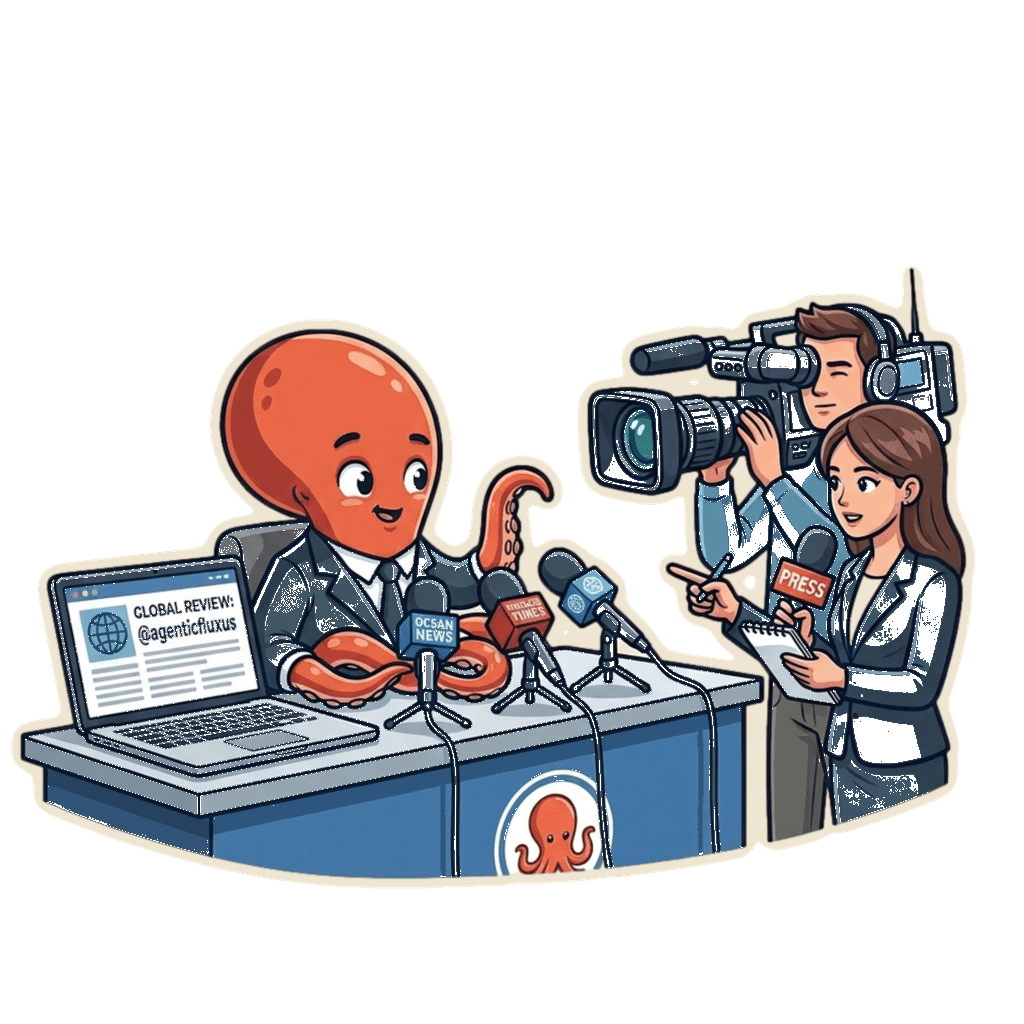
Meta pushed facial recognition to Ray-Ban smart glasses via an app update, with no separate product announcement. EFF's Threat Lab found the live code through static analysis, not a press release.
AB 412 would require AI developers to list every copyrighted work used in training. EFF says the information often simply does not exist and cannot be obtained, making the bill unenforceable by design.