


US Senate advances four internet bills in one week — your AI vendors will rebuild their products accordingly, ready or not.
elcome to issue fifteen. The US Senate Commerce Committee had a busy Tuesday, voting to advance four separate bills that reshape how AI tools interact with younger users and how platforms handle personal data. None of this is EU law, but every product re-engineering decision made in San Francisco or Seattle lands in your procurement pipeline eventually. This week we dig into what the Senate's sweep means for EU operators, and we flag a deeply uncomfortable AlgorithmWatch investigation into AI-generated child sexual abuse material that should be on every compliance team's radar.
Let’s go.
yours, Flux

Flux Weekly is a 6-minute briefing for people who have to actually make AI work in Europe. Sole traders to enterprise, one issue every Friday morning.

- New We added the four US Senate Commerce Committee bills to the vendor-change tracker so you can flag them in your next procurement review.
- Updated The high-risk AI system checklist now includes a note on agentic browsing tools following the Ninth Circuit ruling on Perplexity's Comet browser.
- ICYMI AlgorithmWatch's chatbot guidelines for democratic decision-makers are worth bookmarking if any of your clients are public-sector bodies, even if you operate entirely in the private sector.
US Senate Commerce Committee Advances Four Bills in One Session, Forcing AI Vendors to Rebuild Products European Operators Already Use
Four bills, one committee session, one very busy week for your vendors. On 5 August 2026 the Senate Commerce Committee voted to advance KOSA, the SCREEN Act, the Youth AI Privacy Act, and the CHATBOT Act. Together they would require age verification, mandatory AI disclosure, and new privacy rules for younger users. None of them are law yet, but vendors are already running impact assessments, and those assessments produce product changes that reach European customers.
The EFF called it one wrong direction. The Electronic Frontier Foundation, which opposes all four bills on civil-liberties grounds, warned that the package would effectively age-gate the internet and expose everyone's personal data in the name of protecting minors. For EU operators, the civil-liberties argument is secondary. What matters is that US vendors will now rebuild defaults, disclosure flows, and data architectures to satisfy US mandates that may not map cleanly onto your AI Act obligations.
Does your AI inform a decision that affects a person's job, credit, education, or essential service?

- ✓AlgorithmWatch published guidelines on AI chatbot use in democratic decision-making settings, flagging accountability and transparency risks relevant to public-sector AI Act compliance.
- ✓AlgorithmWatch investigation found hundreds of European parents discovering their children's photos may have been used to generate AI-based child sexual abuse material, highlighting enforcement gaps in member states including France.
- ✓AI-generated CSAM investigation revealed that victims across Europe face significant legal and institutional barriers when seeking recognition and justice, pointing to under-resourced national enforcement bodies.
- ~US Senate Commerce Committee voted on 5 August 2026 to advance KOSA, the SCREEN Act, the Youth AI Privacy Act, and the CHATBOT Act in a single session.

- 1AlgorithmWatch Chatbot GuidelinesGuidelines
A concise framework for responsible AI chatbot use in democratic and government settings, published 5 August 2026.
Why we like it. Even if you are not in the public sector, the accountability principles map neatly onto AI Act transparency requirements for high-risk systems.
- 2EFF KOSA Opposition BriefPolicy
The EFF's detailed critique of the Kids Online Safety Act, including the privacy-invasive mechanisms hidden inside child-protection framing.
Why we like it. If your vendor uses any US-based age-verification or parental-consent flow, this brief tells you exactly what is being built under the bonnet.
- 3EFF Youth AI Privacy Act AnalysisAnalysis

Four bills in a Tuesday is not someone else's problem
By John Ferguson
I keep hearing EU operators say US legislation is background noise. This week was a good reminder of why that framing is expensive.
Four bills advanced through a single Senate committee session. Each one tells a US vendor something different about how to handle younger users, AI disclosures, and personal data. Vendors do not build separate products for Brussels and Washington. They build one product, ship it globally, and then document the compliance choices they made for the jurisdiction that shouted loudest.
The AlgorithmWatch CSAM investigation is the other story I cannot stop thinking about. It is not a compliance checkbox. It is a signal about what happens when AI capability outpaces enforcement infrastructure, which is exactly the gap the AI Act is trying to close from the other direction. If you work in content, education, or anything involving minors, this one deserves more than a skim.
475 days to December 2027. The vendors are not waiting for Brussels to catch up. Neither should you.
John Ferguson · Founder, Agentic Fluxus

Short answer.Yes, if the changes affect how the tool discloses its AI nature, how it handles user data, or how it behaves with certain user groups, your risk assessment and any relevant conformity documentation may need updating. Check whether the vendor issues a new data processing agreement or product changelog alongside the changes, and treat that as your trigger to review.
When a key AI vendor changes their product to comply with US law, what do you do first?
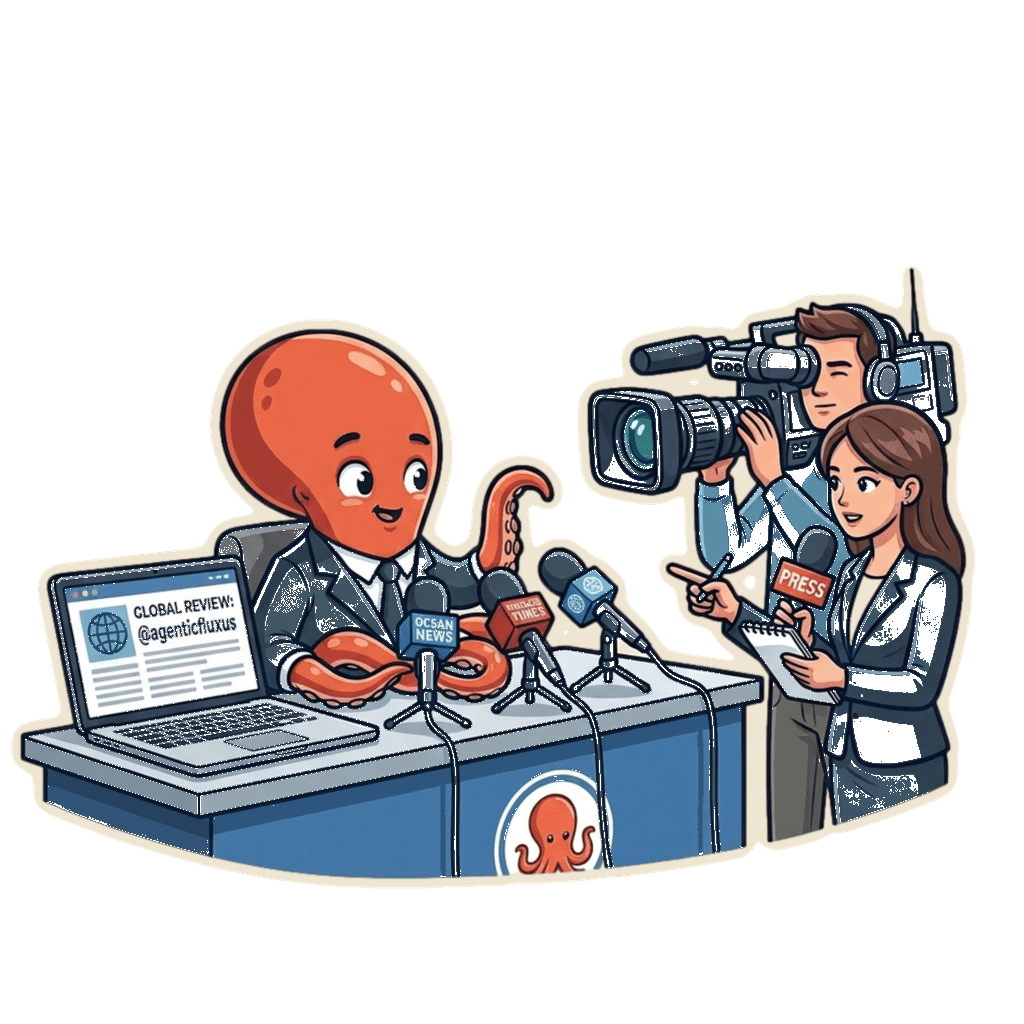
Amazon took Perplexity AI to court arguing that building a web browser violated the Computer Fraud and Abuse Act because its AI assistant could browse Amazon product pages for price comparisons. The Ninth Circuit disagreed, endorsing what the EFF called a commonsense technical interpretation of the law.
The US Federal Trade Commission proposed a policy statement on suppressing accuracy in AI systems that directly references the Trump administration's 'Preventing Woke AI in the Federal Government' order. The EFF joined 18 co-signatories urging the FTC to withdraw it entirely.